How to Build a Lifelong DeFi Practice Without Losing Everything
The security-first framework for sustainable DeFi investing. Security → Systems → Yield. In that order. Always.
How to Build a Lifelong DeFi Practice Without Losing Everything
The security-first framework for sustainable DeFi investing
I've watched smart people lose everything in DeFi. Not because the protocols failed. Not because the market crashed. Because they got the order wrong.
They chased yield first. Learned security second—usually after a painful loss. Developed systems third, if ever.
Here's what I've learned: the order matters more than the strategy.
Security → Systems → Yield. In that order. Always.
The Foundation Nobody Wants to Build
Let's be honest: security is boring. Nobody gets excited about seed phrase backups. No one brags about their approval management routine.
But here's the math that changed my thinking:
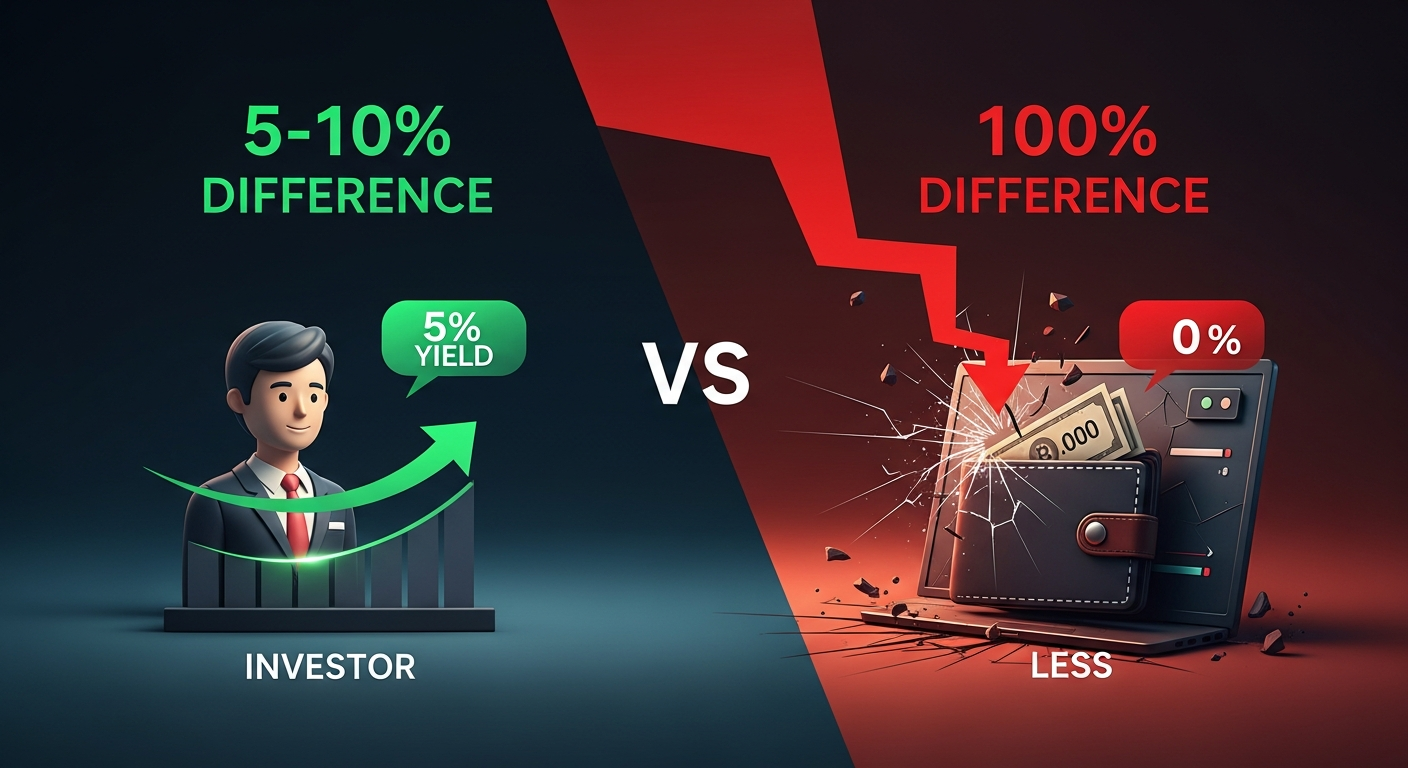
The difference between a mediocre and excellent yield strategy might be 5-10% annually. The difference between good and bad security is 0% or 100%. Everything or nothing.
Most DeFi losses aren't sophisticated attacks. They're:
- Seed phrases in cloud notes
- Clicking phishing links in Discord
- Forgotten unlimited approvals
- Trusting "support" DMs
Every one of these is preventable.
The Security Stack
Hardware Wallet (Day 1) If you're putting more than $10,000 into DeFi, this is non-negotiable. Ledger or Trezor. $70-150. Keeps your keys offline even if your computer is compromised.
Seed Phrase Protocol (Day 1)
- Write on paper immediately
- Upgrade to metal backup
- Never digital—no photos, no cloud, no exceptions
- Store in two locations (home + bank)
- Test recovery before depositing
Operational Security (Ongoing)
- Dedicated device for crypto
- VPN always on
- Hardware 2FA (YubiKey) not SMS
- Weekly approval audits at revoke.cash
This isn't paranoia. This is the cost of doing business in a space where transactions are irreversible and customer support doesn't exist.

The Portfolio Framework
Once security is established, portfolio strategy becomes much simpler.
Allocate by Risk Tolerance
Conservative
- 80% BTC/ETH
- 15% Blue-chip DeFi (Aave, Lido)
- 5% Stablecoins yielding
Balanced
- 50% BTC/ETH
- 25% Large-cap alts
- 20% DeFi protocols
- 5% Experimental
Aggressive
- 30% ETH
- 35% Altcoins
- 25% DeFi
- 10% New protocols
Pick one. Set targets. Stop checking prices daily.
Position Sizing Rules
These saved me from myself:
- New protocol: Max 1% until proven
- Any single token: Max 10%
- Any single protocol: Max 15%
- Experimental total: Max 5%
These limits turn potential disasters into manageable lessons.
Dollar-Cost Averaging
Automate your entries. Remove the decision.
Set a weekly buy. Execute regardless of market conditions. Continue for years.
DCA isn't optimal in every scenario. But it removes the timing decisions that most investors get wrong.
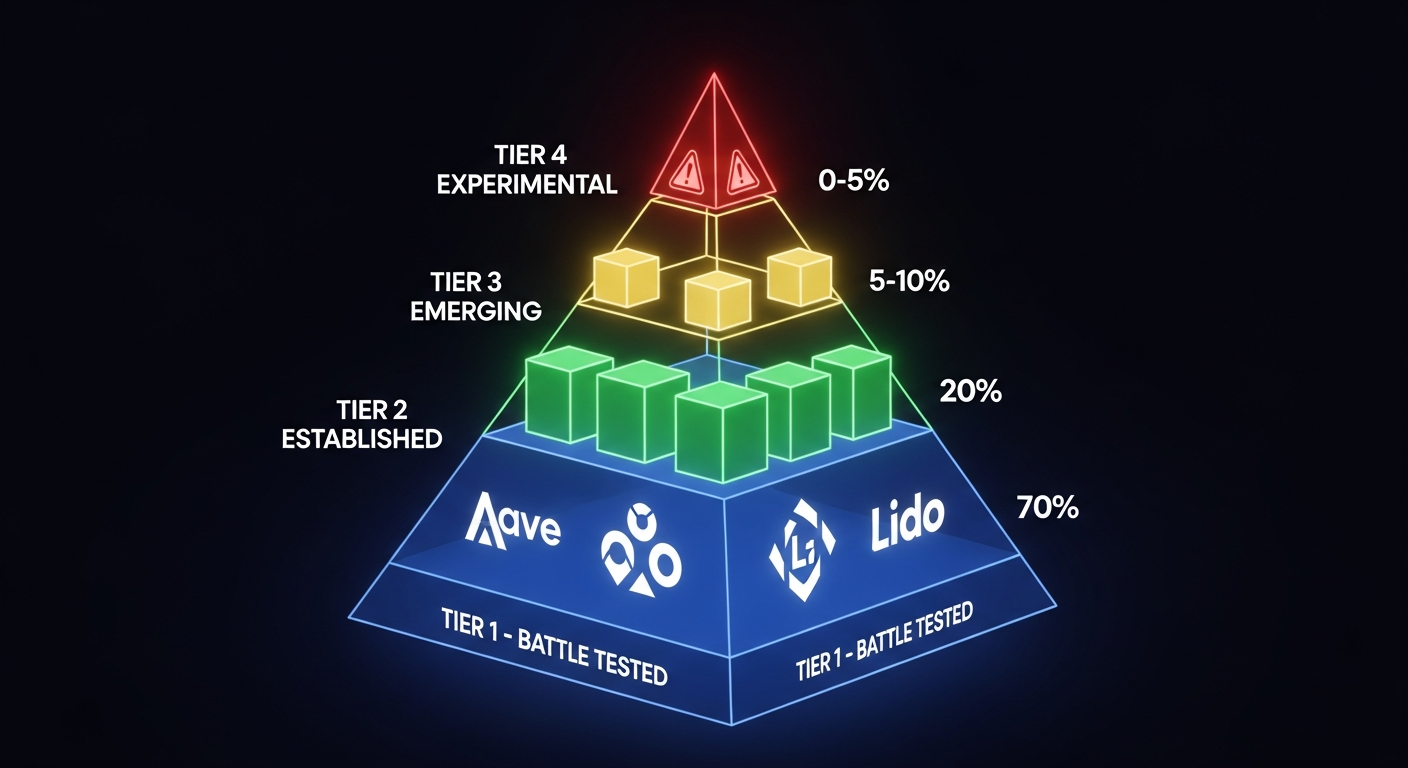
Protocol Selection: The Tier System
Not all protocols deserve your capital equally.
Tier 1: Battle-Tested Aave, Lido, MakerDAO, Uniswap
Multiple audits. Years of operation. Billions in TVL. This is where 70%+ of your DeFi allocation belongs.
Tier 2: Established Curve, Convex, GMX
Quality audit. 6+ months operation. $100M+ TVL. Appropriate for 20-25%.
Tier 3: Emerging Newer protocols with at least one audit.
Only 5-10% of allocation. These are learning positions.
Tier 4: Experimental New launches. Minimal/no audit.
Only money you can lose entirely. 0-5% max.
Before depositing anywhere, ask:
- Who audited this?
- Are findings resolved?
- Where does yield come from?
- Is the team doxxed?
If you can't answer these, you're gambling.
The Daily Routine
DeFi investing isn't passive. But it shouldn't be all-consuming either.
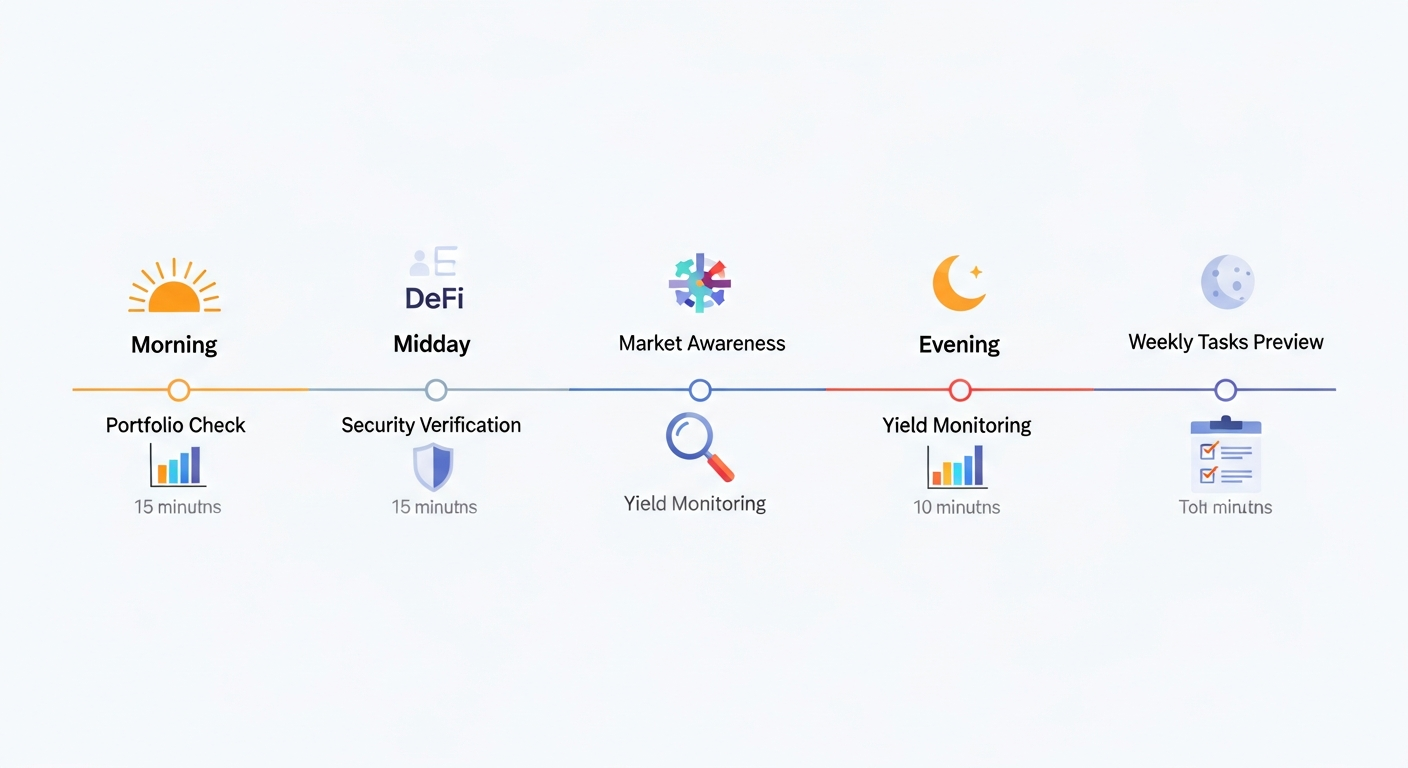
Daily (15 min)
- Check portfolio value (DeBank)
- Verify no unauthorized transactions
- Note any liquidation risk
- Quick market scan
Weekly (1-2 hours)
- Calculate actual yields
- Audit approvals
- Review governance proposals
- Update tracking
Monthly (3-4 hours)
- Full portfolio review
- Security audit
- Tax tracking
- Strategy adjustment
Consistency beats intensity. Thirty minutes daily compounds better than marathon sessions.
Understanding Yield
Before chasing APY, understand where it comes from:
Lending Interest: Borrowers pay. Sustainable.
Trading Fees: Traders pay. Depends on volume.
Staking: Protocol pays from emissions. Sustainable if tokenomics work.
Liquidity Mining: Protocol pays to bootstrap. Often unsustainable.
If you can't identify the yield source, you might be the yield source—exit liquidity for insiders.
Impermanent Loss Reality
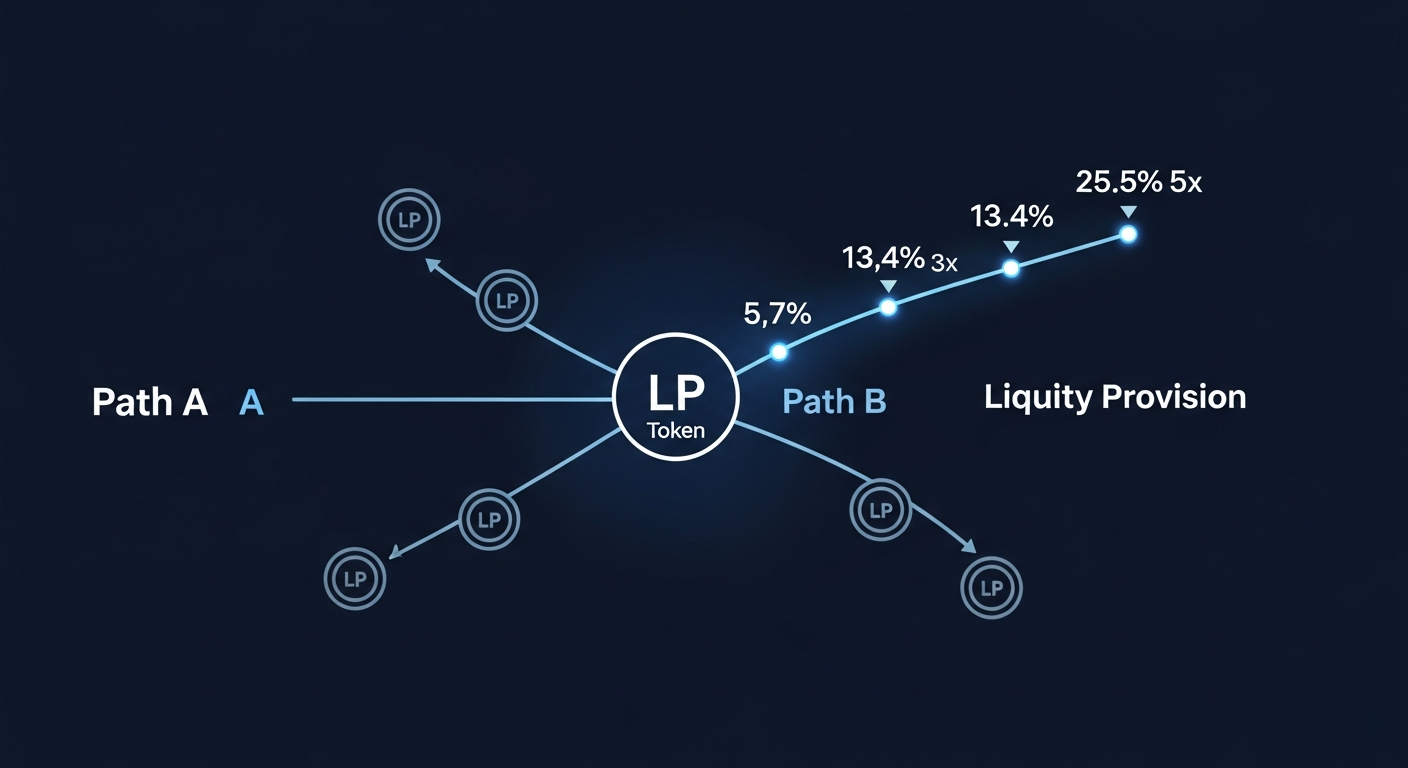
Providing liquidity to volatile pairs costs you:
- 2x price move = 5.7% IL
- 3x price move = 13.4% IL
- 5x price move = 25.5% IL
This is before fees. Ensure fees + incentives exceed expected IL or you're paying for the privilege of providing liquidity.
The Getting Started Path
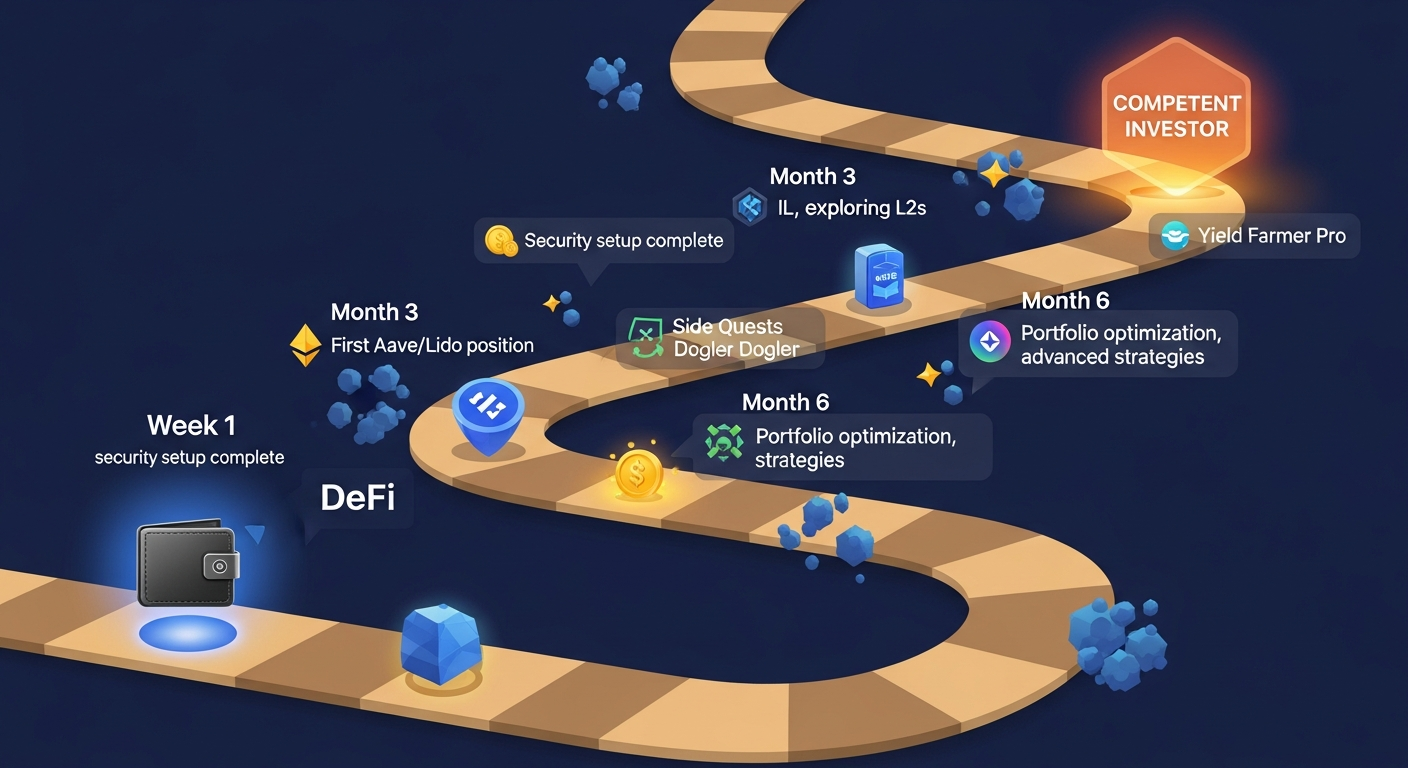
Week 1: Security setup. Hardware wallet. Seed backup. Tracking software.
Weeks 2-4: First positions. ETH staking via Lido. Stablecoin lending on Aave. Simple, established, educational.
Months 2-3: Learn Uniswap. Understand impermanent loss. Try a yield aggregator. Explore L2s.
Months 4-6: Build to target allocation. Implement DCA. First rebalancing. Governance participation.
Month 6+: Advanced strategies only after demonstrated competence.
The time you spend building foundation pays dividends forever.
The Mindset Shift
DeFi isn't a casino. It's a profession.
Professionals have:
- Systems they follow
- Risk limits they respect
- Continuous education
- Long time horizons
The investors who survive and thrive treat DeFi this way. The ones who don't—well, they provide liquidity for the rest of us.
Start Today, Start Slow
Here's your homework:
- Order a hardware wallet today
- While waiting, read this guide again
- Set up wallet properly when it arrives
- Make your first deposit into Lido or Aave
- Track everything from day one
Start smaller than feels comfortable. Be more cautious than seems necessary.
The yields will still be there when your foundation is solid.
The best time to build good habits was yesterday. The second best time is today—before your next deposit.
Written by
Global Builders Club
Global Builders Club
If you found this content valuable, consider donating with crypto.
Suggested Donation: $5-15
Donation Wallet:
0xEc8d88...6EBdF8Accepts:
Supported Chains:
Your support helps Global Builders Club continue creating valuable content and events for the community.