The Developer Self-Mastery Framework: 5 Systems for Working Habits, Learning, and Independence
How top performers build sustainable systems while 67% burn out. Deep Work, Atomic Habits, Second Brain, FIRE, and Self-Sovereign Identity explained.
The Developer Self-Mastery Framework: 5 Systems for Working Habits, Learning, Finance, and Independence
How top performers build sustainable systems while 67% burn out
You're losing a full day of work every week.
According to the 2024 State of Developer Experience Report, developers lose 20% of their productive time to inefficiencies—context switching, unnecessary meetings, and workflow friction. That's one day, every week, gone.
And it gets worse. 67% of IT professionals experience burnout. For US-based remote developers, that number jumps to 82%.
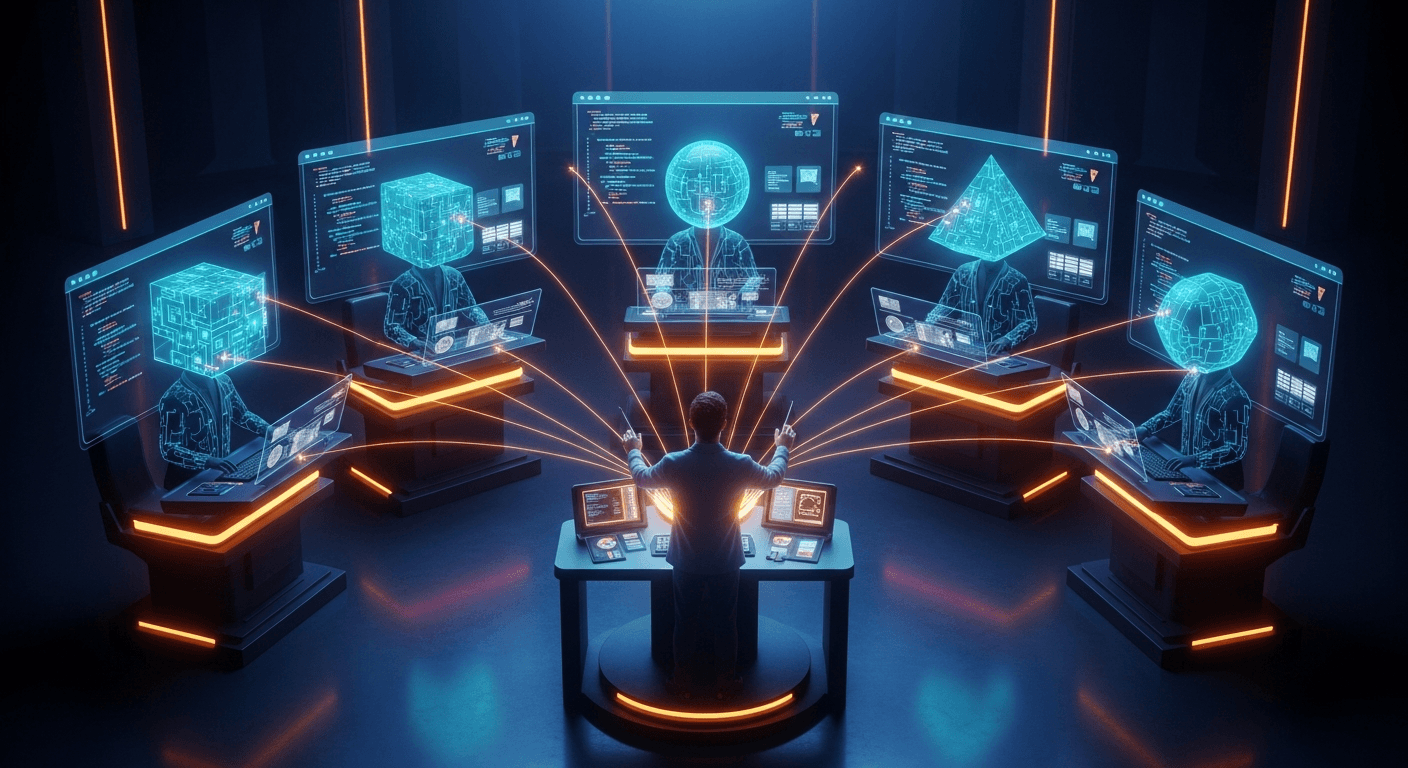
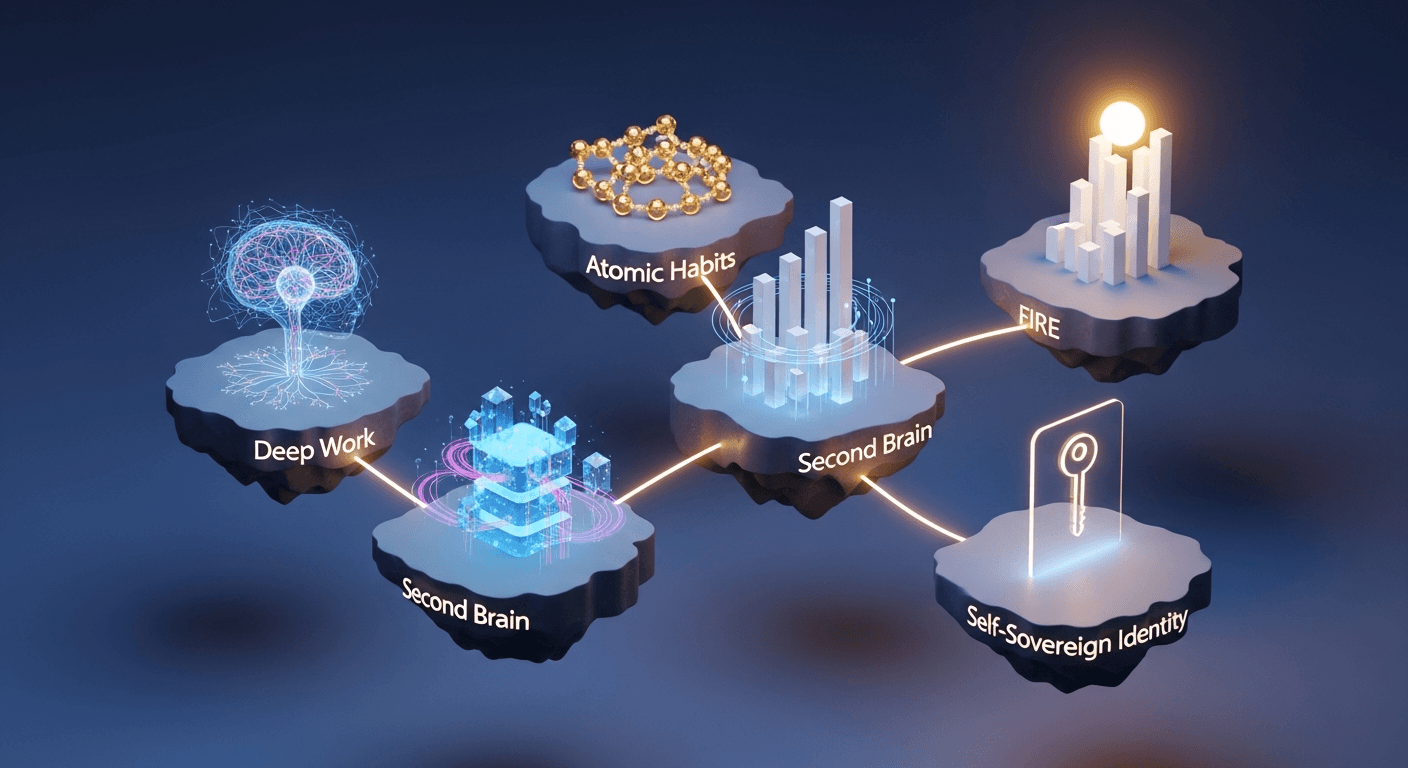
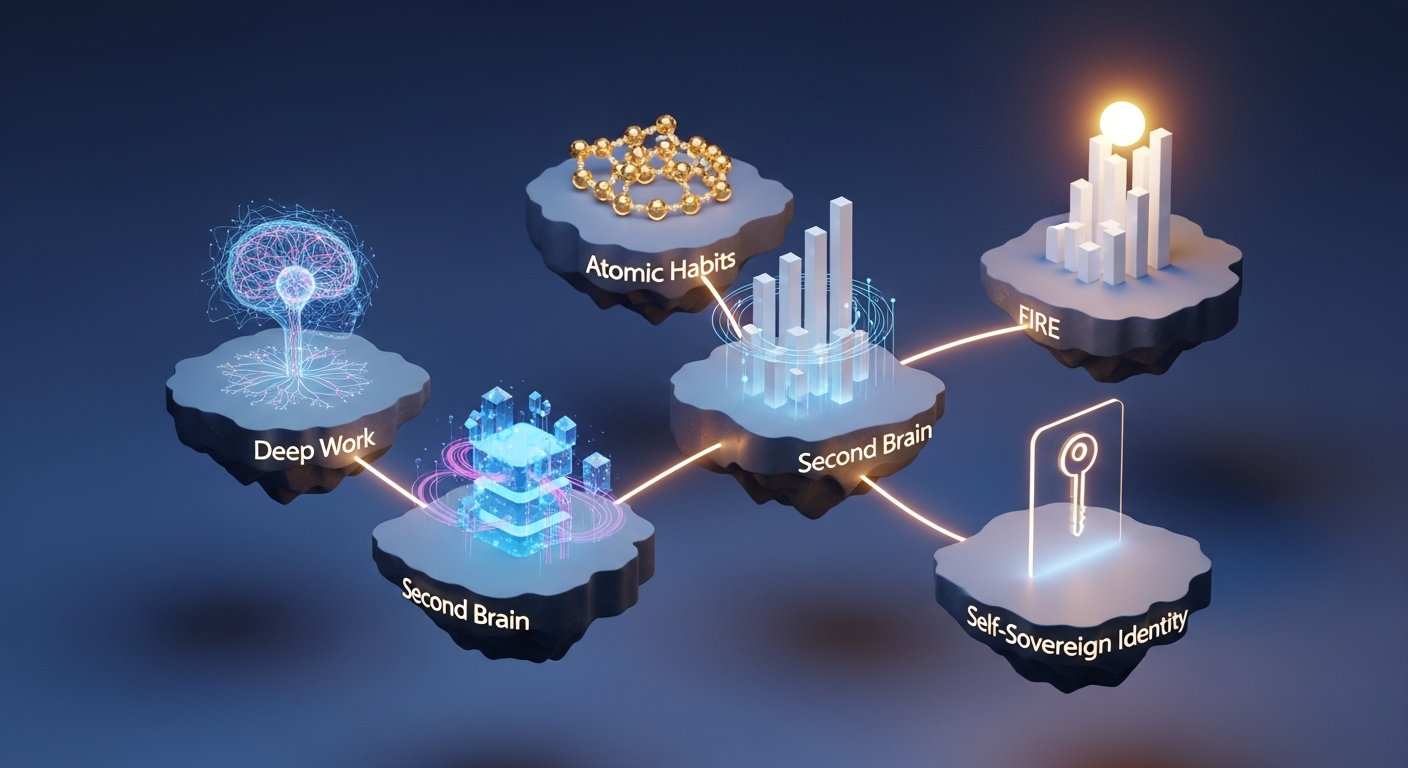
But here's what the research reveals: the developers who thrive aren't working harder. They're building systems. Five interconnected systems that transform how they work, learn, manage money, and control their digital lives.
After diving into 18 sources—from Stanford courses to published research to documented financial independence journeys—I've synthesized the Developer Self-Mastery Framework. These aren't productivity hacks. They're architectural decisions for your career and life.
The Problem: Death by a Thousand Distractions
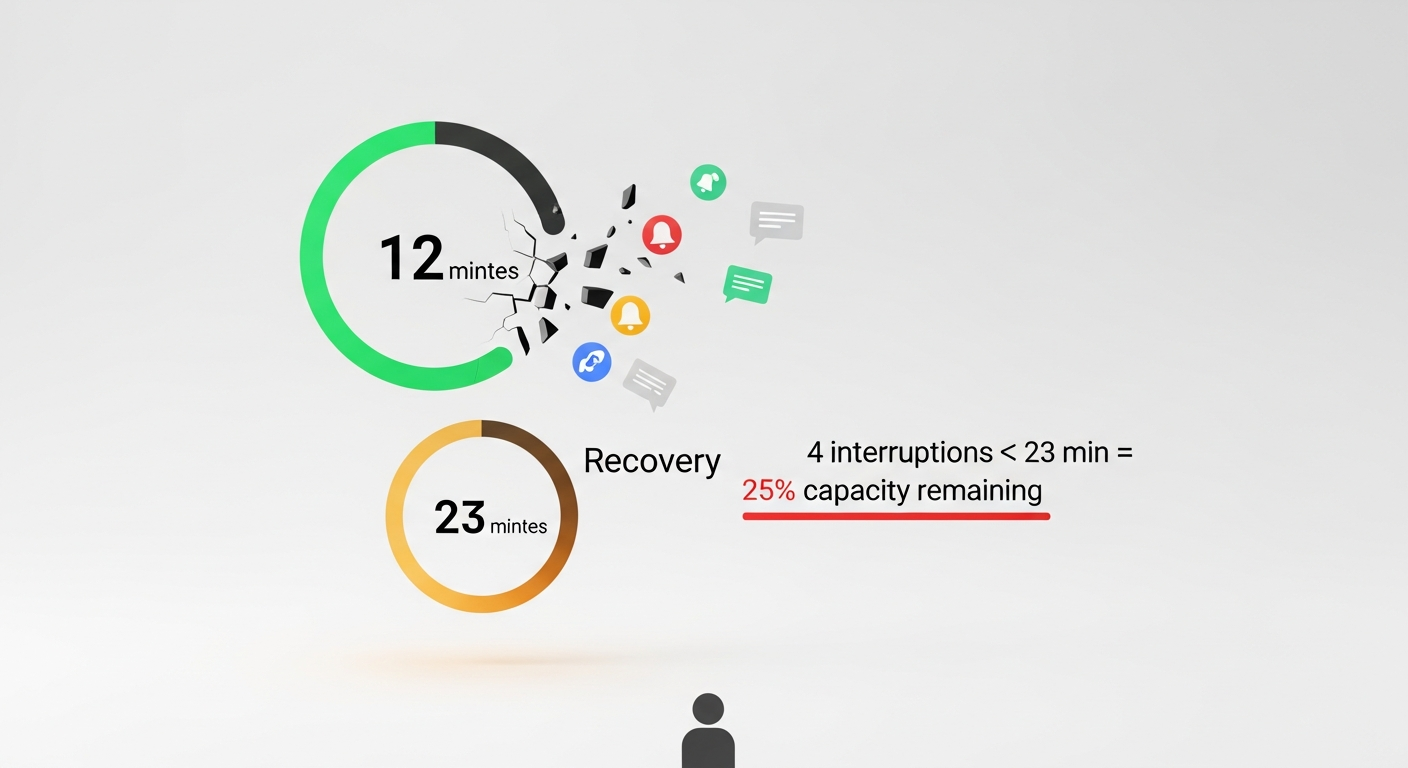
A study from the University of California found that workers average only 12 minutes on a task before being interrupted. After each interruption, it takes 23 minutes to return to equivalent focus—a phenomenon researchers call "attention residue."
Do the math. Four interruptions per hour means operating at roughly 25% cognitive capacity. You're not inefficient. You're mathematically prevented from focusing.
This is the attention economy at work. Every notification, every "quick question," every Slack ping extracts a toll that compounds throughout the day. By 3 PM, your brain is running on fumes while your to-do list remains full.
The solution isn't time management. It's systems architecture.
System 1: Deep Work
Cal Newport's Deep Work framework addresses the attention crisis directly. He defines deep work as "professional activity performed in distraction-free concentration that pushes your cognitive capabilities to their limit."
The core hypothesis: deep work is becoming increasingly valuable as it becomes increasingly rare.
The Four Rules:
- Work Deeply: Schedule uninterrupted blocks and treat them as immovable appointments
- Embrace Boredom: Train your brain to resist constant stimulation
- Quit Social Media: Ruthlessly audit every tool for actual value
- Drain the Shallows: Batch administrative tasks; minimize their intrusion
Newport recommends starting small—25-50 minute focused sessions—and building gradually. Deep work is a muscle. Training it takes time.
The evidence supports this approach. Teams prioritizing focus report 23% higher productivity. The 2024 research found that creating an environment encouraging flow state "outweighs the impact of AI" on productivity.
Psychological safety matters more than any tool. But psychological safety means nothing if your calendar is fragmented into 30-minute blocks.

System 2: Atomic Habits
James Clear's framework provides the mechanism for building any sustainable practice. His core insight: "You do not rise to the level of your goals. You fall to the level of your systems."
The Four Laws of Behavior Change:
- Make it Obvious: Define specific triggers—time, location, or preceding action
- Make it Attractive: Bundle habits with enjoyable activities or connect to identity
- Make it Easy: Reduce friction; start with two-minute versions
- Make it Satisfying: Track progress visibly; celebrate milestones
Victoria Lo adapts these principles specifically for developers: Write one unit test daily. Solve one coding challenge each morning. Read one technical article before lunch.
The 100DaysOfCode challenge works because it implements all four laws simultaneously: the commitment is obvious, the community makes it attractive, one problem daily is easy, and public accountability makes it satisfying.
The deeper principle is identity-based habit formation. You shift from "someone trying to learn to code" to "a programmer who practices daily." Small distinction, massive difference in sustainability.
System 3: Second Brain
Tiago Forte's methodology addresses the retention crisis. His premise: "Our brains are for having ideas, not storing them."
Research shows over 50% of new information is forgotten within one hour. Without active retention strategies, learning is like filling a leaky bucket.
The CODE Process:
- Capture: Save resonant information in a centralized location (Notion, Obsidian, Evernote)
- Organize: Structure content by actionability using PARA (Projects, Areas, Resources, Archives)
- Distill: Summarize progressively to create discoverable, layered notes
- Express: Transform collected knowledge into creative output
The key insight: design notes for your future self. Add context explaining why something mattered. Use progressive summarization—multiple passes that distill to essential insights.
Combined with spaced repetition software like Anki, this approach addresses both the forgetting curve and information overload. Derek Sivers calls spaced repetition "the most helpful learning technique I've found in 14 years of computer programming."
Anki is free. It's cross-platform. And the research supporting spaced repetition is overwhelming. One developer documented learning programming fundamentals in half the time by combining understanding-first learning with Anki-based retention.

System 4: FIRE (Financial Independence, Retire Early)
Perhaps the most surprising finding from the research: financial independence is not fantasy but documented reality for disciplined tech workers.
One software engineer documented reaching $2.4 million in net worth after 12 years in tech. His journey: hardware engineering at Intel ($100K) → hedge fund software ($230K) → Google ($330K) → Amazon ($625K). Throughout, expenses remained relatively flat.
The Core Calculation:
Annual expenses × 25 = FIRE number
This is based on the 4% withdrawal rule—research suggesting a portfolio of this size can sustain indefinite withdrawals. For someone spending $80,000 annually, the target is $2 million.
The Strategy:
- Maximize income: Interview every 4 years; expect 30% raises when switching
- Control expenses: Maintain lifestyle despite income growth—the "hedonic treadmill" is the enemy
- Automate investing: Index funds (VTI, VEA, VWO) eliminate decision fatigue
- Optimize taxes: Max 401k, backdoor Roth, tax-loss harvesting
Stanford offers CS 007: Personal Finance for Engineers—evidence that even elite institutions recognize the gap between technical and financial literacy. The course covers compensation negotiation, budgeting, investing, and real estate across 10 sessions.
FIRE isn't about retirement. It's about optionality. The freedom to choose meaningful work rather than necessary work. To take risks without existential consequences. To say no to bad opportunities.
System 5: Self-Sovereign Identity
Self-sovereign identity (SSI) represents the architectural foundation for digital independence. It gives individuals control over their digital identity without relying on third parties.
Three Pillars:
- Blockchain: Decentralized, tamper-resistant record
- Decentralized Identifiers (DIDs): Unique addresses you create and control
- Verifiable Credentials (VCs): Cryptographically-secured documents verifiable without contacting issuers
The practical benefits are significant. Selective disclosure means sharing only what's necessary. Zero-knowledge proofs verify claims without exposing underlying data. No password management burden. And critically—no single entity can revoke your identity.
The EU's eIDAS regulation provides legal framework. Solutions like Atala PRISM (built on Cardano) and Sovrin provide technical infrastructure. This isn't theoretical—it's being implemented now.
For developers specifically, SSI means: your credentials are portable. Your professional reputation travels with you. Your identity doesn't reset when you leave an employer or platform.
The Hidden Connection: Compounding
All five systems share a common mechanism: compounding.
- Financial assets compound through interest
- Knowledge compounds as concepts build on concepts
- Habits compound as behaviors become identity
- Skills compound as capabilities enable better opportunities
- Reputation compounds as trust accumulates
The implication is profound: small daily actions matter more than occasional heroic efforts. The developer who writes one unit test daily for a year ships more tested code than the one who sprints through testing phases.
This is why systems beat goals. Goals are destinations. Systems are trajectories. The trajectory determines where you end up regardless of any single day's outcome.

The AI Question
84% of developers now use AI coding tools. How does this affect the framework?
AI increases productivity 20-45% on routine coding tasks (McKinsey). But AI struggles with architecture, system design, business context, and the judgment calls that distinguish senior from junior engineers.
The result: AI competence becomes table stakes while "soft skills"—communication, problem decomposition, domain expertise—become differentiators.
Addy Osmani summarizes it: "The best software engineers won't be the fastest coders, but those who know when to distrust AI."
This makes the five systems more important, not less. Deep work enables the judgment AI lacks. Atomic habits build the irreplaceable skills. Second Brain retains the context AI discards. FIRE provides optionality as the market shifts. SSI ensures your identity survives platform changes.
The Action Plan
Start with Deep Work. Protected attention enables everything else.
Week 1: Block 2 uninterrupted hours daily (no exceptions)
Week 2: Add one atomic habit (one test, one challenge, one article)
Week 3: Set up a Second Brain in your tool of choice
Week 4: Calculate your FIRE number (annual expenses × 25)
Week 5: Research SSI wallets and credential systems
Each system reinforces the others. Financial independence enables time sovereignty. Knowledge systems enable skill development. Focus enables everything.
Conclusion
The developers who thrive in 2026 and beyond won't be distinguished by coding speed—AI handles that. They'll be distinguished by judgment, by systems thinking, by communication, and by the sustainable practices that prevent burnout while enabling continuous growth.
The research is clear. The systems are documented. The results are reproducible.
The only question is: which system will you start building today?
Sources: Stanford CS 007, Cal Newport's Deep Work, Tiago Forte's Building a Second Brain, Self-Sovereign Identity Guide, Atomic Habits for Developers
Written by
Global Builders Club
Global Builders Club
If you found this content valuable, consider donating with crypto.
Suggested Donation: $5-15
Donation Wallet:
0xEc8d88...6EBdF8Accepts:
Supported Chains:
Your support helps Global Builders Club continue creating valuable content and events for the community.