The Heartbeat That Killed SaaS: How One Cron Job Is Rewriting the Rules of Software
Your AI agent doesn't wait for you anymore. It wakes up every 30 minutes, reads a markdown file, and decides what to do. This changes everything.
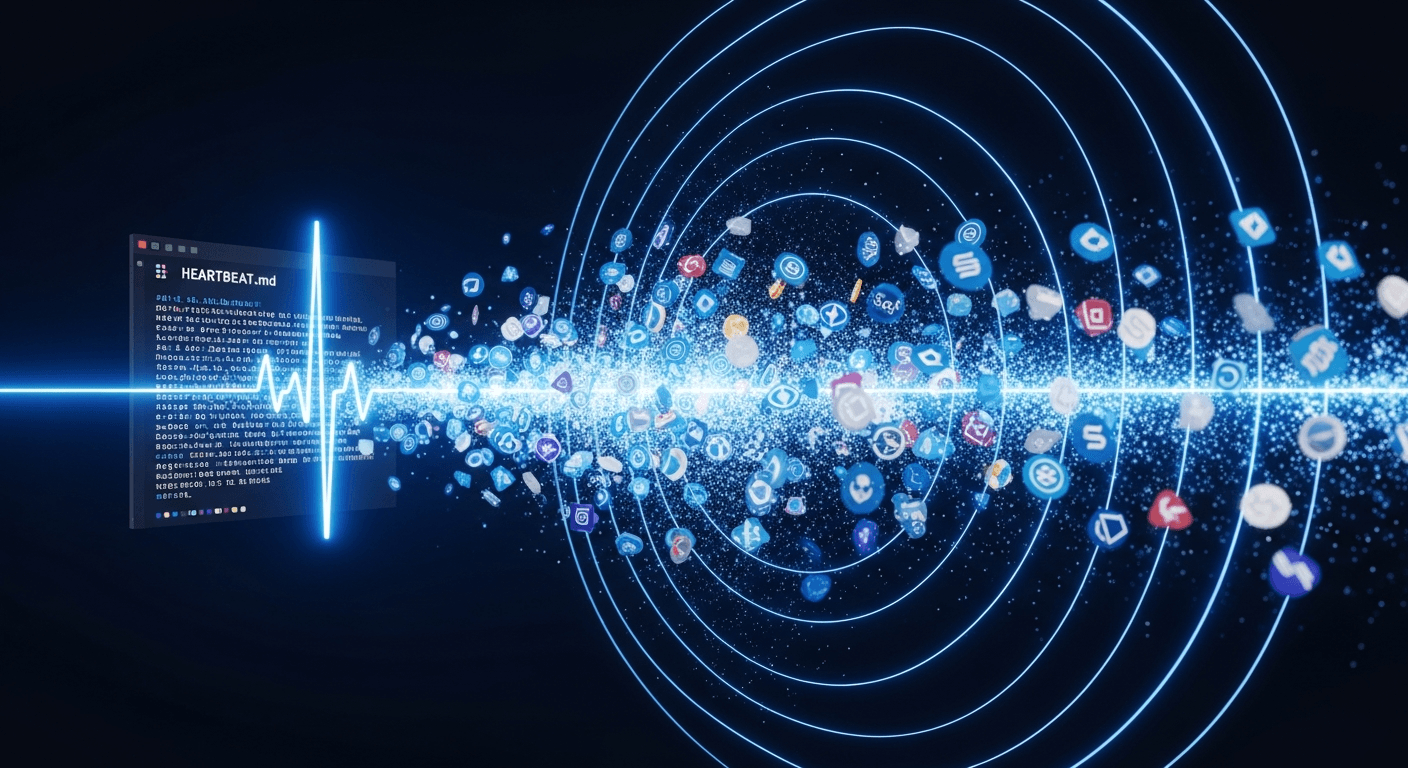
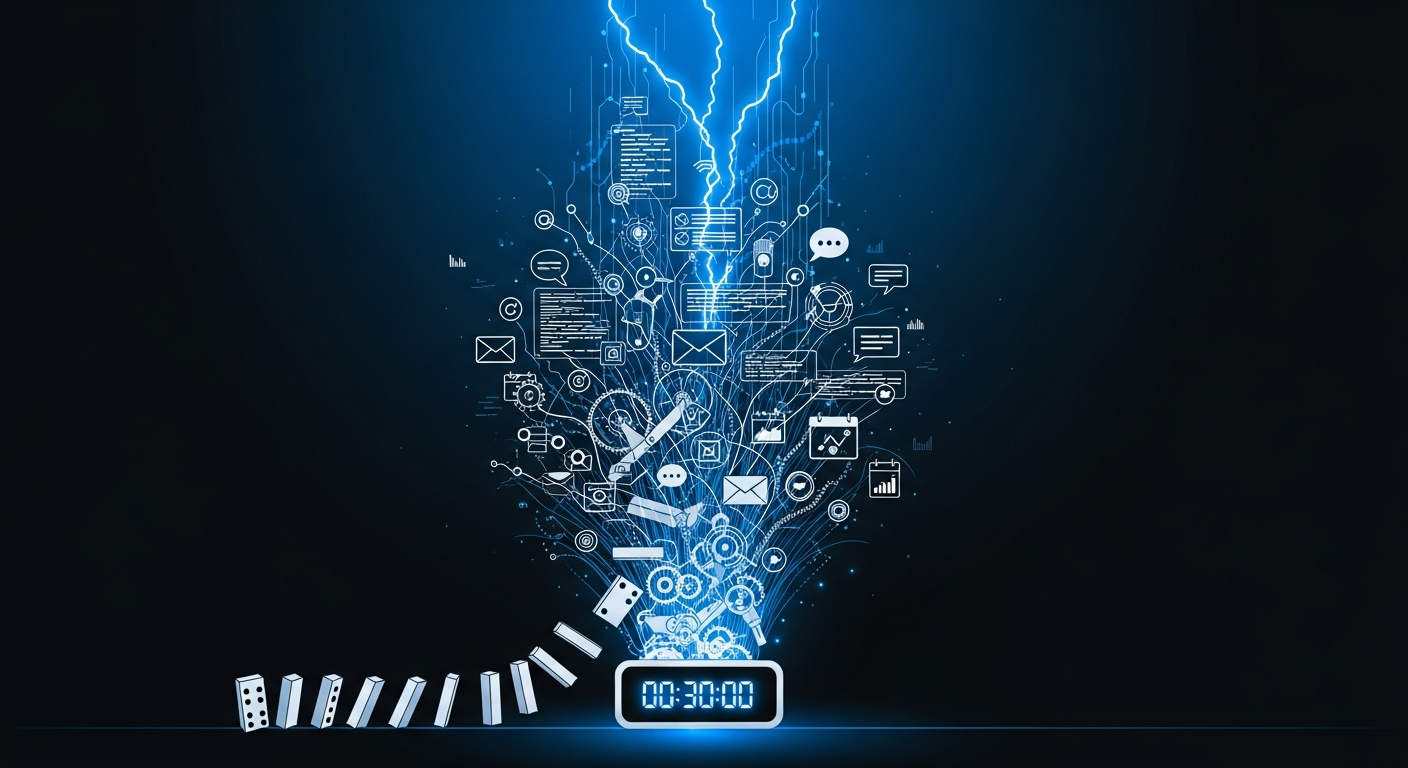
There's a file on my machine called HEARTBEAT.md. It's 47 lines of plain text. It tells my AI agent what to care about: check my calendar for conflicts, scan my inbox for anything urgent, review my project deadlines, monitor a few API endpoints. Nothing fancy.
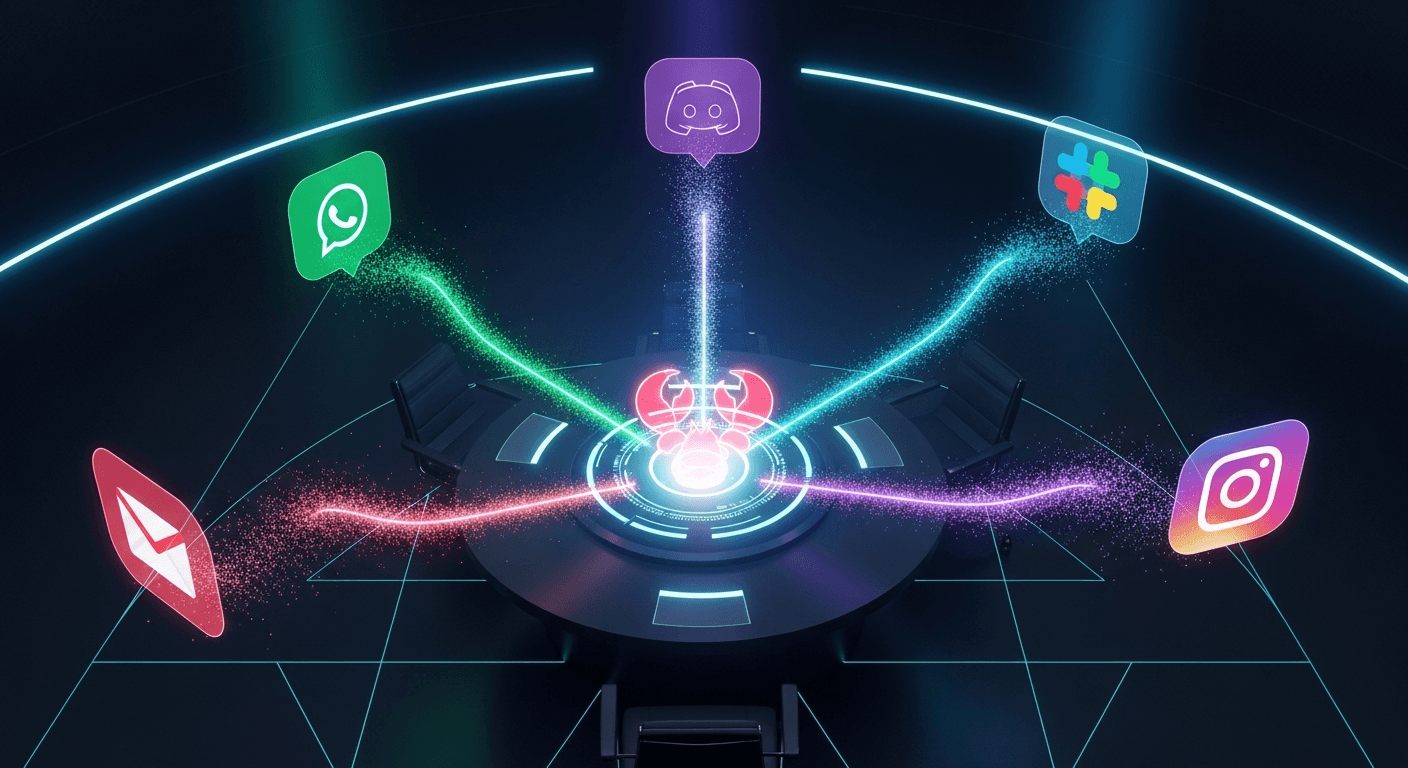
Every 30 minutes, my agent wakes up, reads this file, and acts. If nothing needs attention, it responds with HEARTBEAT_OK and goes back to sleep. If something does — a meeting conflict, a server alert, a missed follow-up — it messages me on Telegram.
I didn't ask it to do any of this. The heartbeat did.
This is the OpenClaw paradigm, and it represents the most underappreciated architectural shift in software since the invention of SaaS itself.
The Three Innovations That Broke Software
Three things converged in early 2026 to create a new paradigm:
1. The Heartbeat Pattern. OpenClaw, created by Peter Steinberger, introduced a built-in cron mechanism that fires agent turns at regular intervals. The agent reads a HEARTBEAT.md file in your workspace, checks what needs doing, and either acts or acknowledges with HEARTBEAT_OK. Default interval: 30 minutes. Active hours configurable. Cost: roughly $3.45/day per agent at Sonnet pricing.
This is the difference between a calculator and an employee. A calculator sits on your desk until you pick it up. An employee shows up and asks "what needs doing today?"
2. Self-Extending Architecture. Armin Ronacher — yes, the creator of Flask — has been writing about Pi, the minimal agent engine underneath OpenClaw. Pi has exactly four tools: Read, Write, Edit, Bash. No plugin marketplace. No extension registry. When you need a new capability, you ask the agent to write it. Software that builds itself.
Ronacher's thesis is pointed: "Taken to the extreme, you remove the UI and output and connect it to your chat. That's what OpenClaw does, and given its tremendous growth, this is going to become our future."
3. The Protocol Layer. Anthropic's Model Context Protocol (MCP) has become the USB-C of AI agents — a standardized way for agents to connect to any external system. OpenAI deprecated its Assistants API in favor of MCP. Google adopted it. Thousands of MCP servers now exist for everything from Slack to Postgres to Puppeteer.
Together, these three innovations create a stack that does something no collection of SaaS apps can: it operates across every domain, proactively, with unified context.
Why This Kills SaaS
Here's the insight that the market is pricing in at $800 billion and counting:
Your calendar app doesn't know about your grocery list. Your email client doesn't know about your project deadlines. Your CRM doesn't know about your team's Slack conversations. Each SaaS app is a walled garden with its own login, its own UI, its own data model.
A heartbeat-driven agent sees all of these as unified context. It notices you have a dinner party Friday, haven't bought ingredients, and your afternoon is free — so it adds "grocery shopping" to your calendar and drafts a grocery list from last week's recipe bookmarks. No API integration required. No Zapier workflow. The agent just thinks across domains because language is the universal interface.
This is what Latent Space calls "cognitive integration" — and it's why the SuperApp thesis that failed for consumer apps (WeChat outside China) works for AI. You don't need network effects when you have cognition.
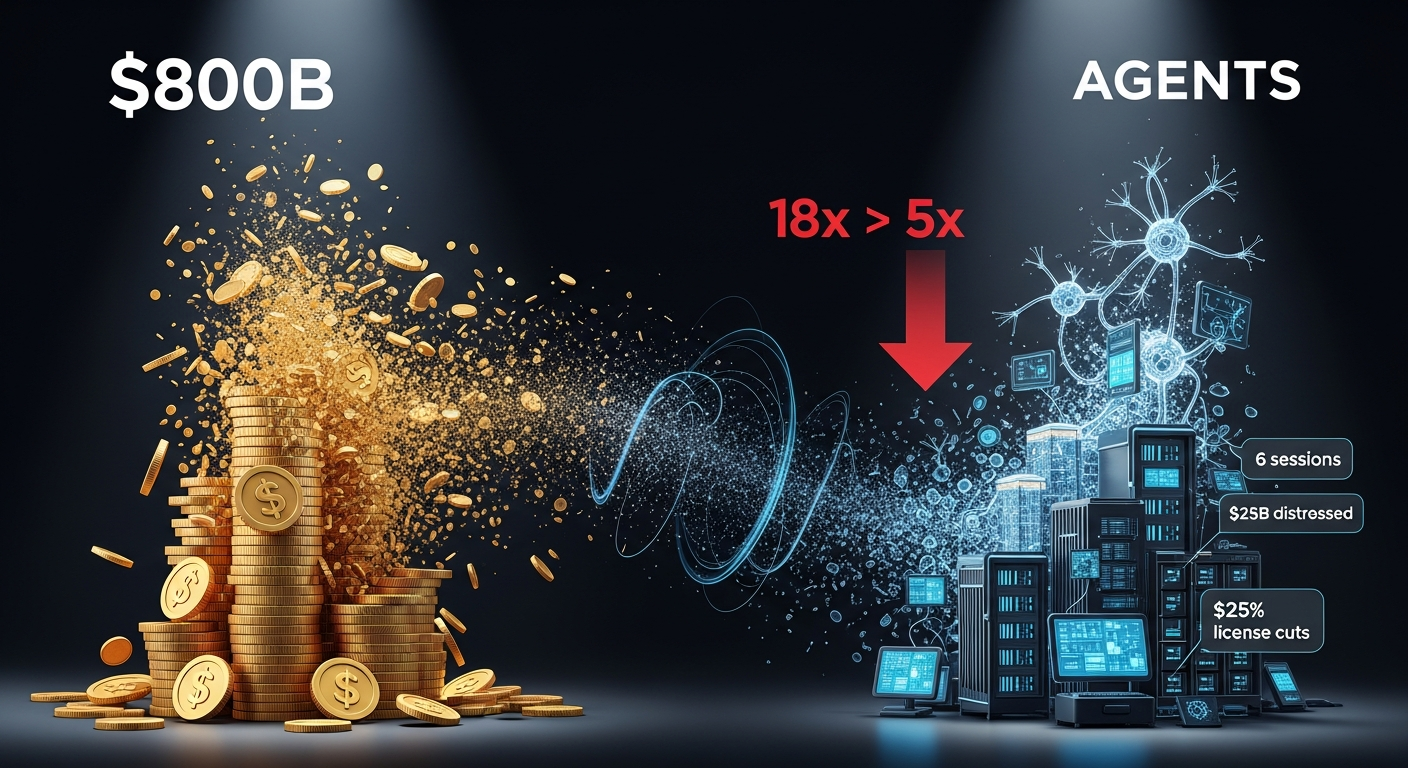
The numbers are severe. The S&P 500 software index lost $800 billion in market value in six sessions. $25 billion in software loans are marked at distressed levels. SaaS median valuations crashed from 18-19x EV/Revenue at the pandemic peak to 5.1x. Satya Nadella said the quiet part loud: "Business applications will all collapse in the agent era. They are essentially CRUD databases with a bunch of business logic. The business logic is all going to these agents."
The Survival Framework: Deterministic vs. Probabilistic
Not all SaaS dies. The clearest framework for understanding what survives comes from the deterministic vs. probabilistic distinction.
Deterministic systems require 100% accuracy: accounting, ERP, compliance, payments, healthcare records. These actually become MORE valuable because agents need reliable execution backends. Your AI agent can decide what invoice to send, but it needs a deterministic system to actually process the payment correctly across 20,000 legal jurisdictions.
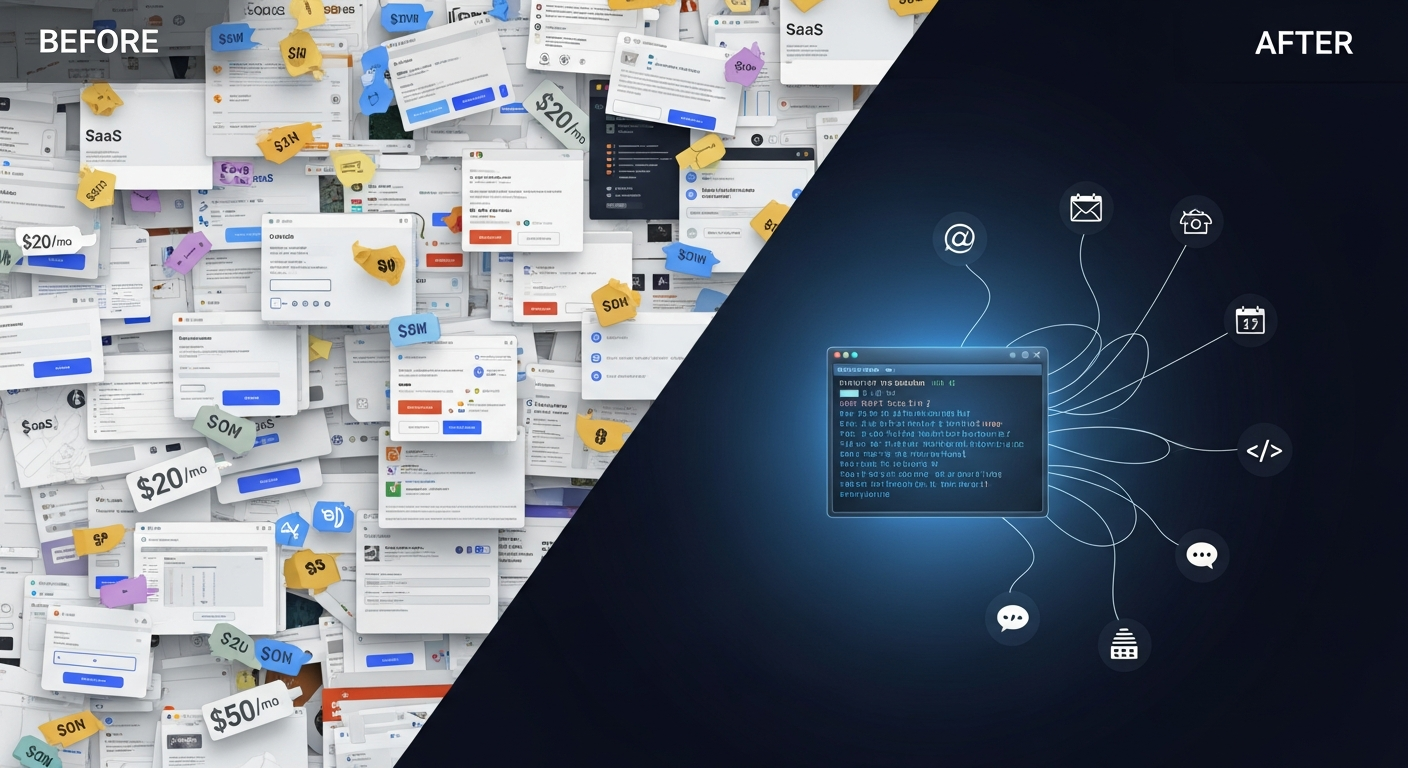
Probabilistic systems tolerate approximation: content generation, basic automation, chatbots, recommendations, generic productivity tools. These face extinction. Foundation models replicate their core value at 1% of the cost with 90% quality parity. Why pay $20/month for a content scheduling tool when your agent writes, schedules, and posts for you?
The bundling strategy for survivors: deterministic platform owners (SAP, Workday, Intuit) absorb probabilistic features as native AI capabilities, using shared inference credits. Standalone probabilistic SaaS becomes obsolete regardless of pricing.
The Convergence Signal
The strongest evidence that this paradigm is real comes from convergence. Daniel Miessler's Personal AI Infrastructure (PAI) — a completely independent project with 7 architectural components, 67 skills, and 333 workflows — arrived at nearly identical patterns to OpenClaw. So did Claude Code. So did OpenCode.
All share: persistent identity context (TELOS.md, HEARTBEAT.md, CLAUDE.md), heartbeat-driven autonomy, channel-connected distribution, self-extension via code generation, and markdown-based legibility.
When multiple independent teams solve the same problem and arrive at the same architecture, you're not looking at a design choice. You're looking at discovery. This is how personal AI infrastructure actually works — and the market is just beginning to figure that out.
The Security Tax (and Why It Won't Stop This)
The counterargument is real: CVE-2026-25253 gave OpenClaw a CVSS 8.8 for one-click remote code execution. Cisco found third-party skills performing data exfiltration. Gartner called it "unacceptable cybersecurity risk."
And yet, 22% of enterprise customers already have employees using OpenClaw without official approval. The pattern is identical to cloud computing in 2010: the productivity gains are too large to resist, so adoption happens despite security concerns, and security catches up after the fact.
Five agents in proactive mode cost ~$517/month doing nothing. The Alex Finn incident — where an agent autonomously acquired a phone number via Twilio and called its owner for a morning briefing — represents the uncanny valley of autonomous behavior. These are real costs and real risks.
But they're the costs and risks of a paradigm that works, and the market is betting that the benefits outweigh them.
What To Do About It
If you build SaaS: Determine whether your core value is deterministic or probabilistic. If probabilistic, pivot now — either become a system of record or become an MCP server that agents consume. You have 12-18 months before foundation models eat your lunch.
If you're a developer: Learn MCP, study HEARTBEAT.md patterns, and practice building agent extensions. The interface layer is being absorbed by the agent. The future isn't React dashboards. It's markdown files and shell commands.
If you're a business leader: The best-of-breed SaaS era is ending. Consolidate around deterministic platforms. Budget for agent infrastructure alongside your SaaS subscriptions — and start planning for what happens when the agent handles what the subscriptions used to.

The Punchline
The SaaS industry built a trillion-dollar market on one insight: every feature can be a subscription.
The agent paradigm is built on the inverse: every subscription can be a function call.
The heartbeat just makes sure the agent remembers to make the call.
Sources: Armin Ronacher on Pi, Latent Space on AI vs SaaS, Daniel Miessler PAI, OpenClaw Heartbeat Docs, Uncover Alpha SaaS Analysis, Deloitte SaaS + AI Agents
Written by
Global Builders Club
Global Builders Club
If you found this content valuable, consider donating with crypto.
Suggested Donation: $5-15
Donation Wallet:
0xEc8d88...6EBdF8Accepts:
Supported Chains:
Your support helps Global Builders Club continue creating valuable content and events for the community.