What Naruto Taught Me About Escaping the Victim Mindset (And Why It Matters for Builders)
How a 700-episode anime about ninjas maps perfectly to the psychology that keeps founders, developers, and creators stuck
What Naruto Taught Me About Escaping the Victim Mindset (And Why It Matters for Builders)
How a 700-episode anime about ninjas maps perfectly to the psychology that keeps founders, developers, and creators stuck
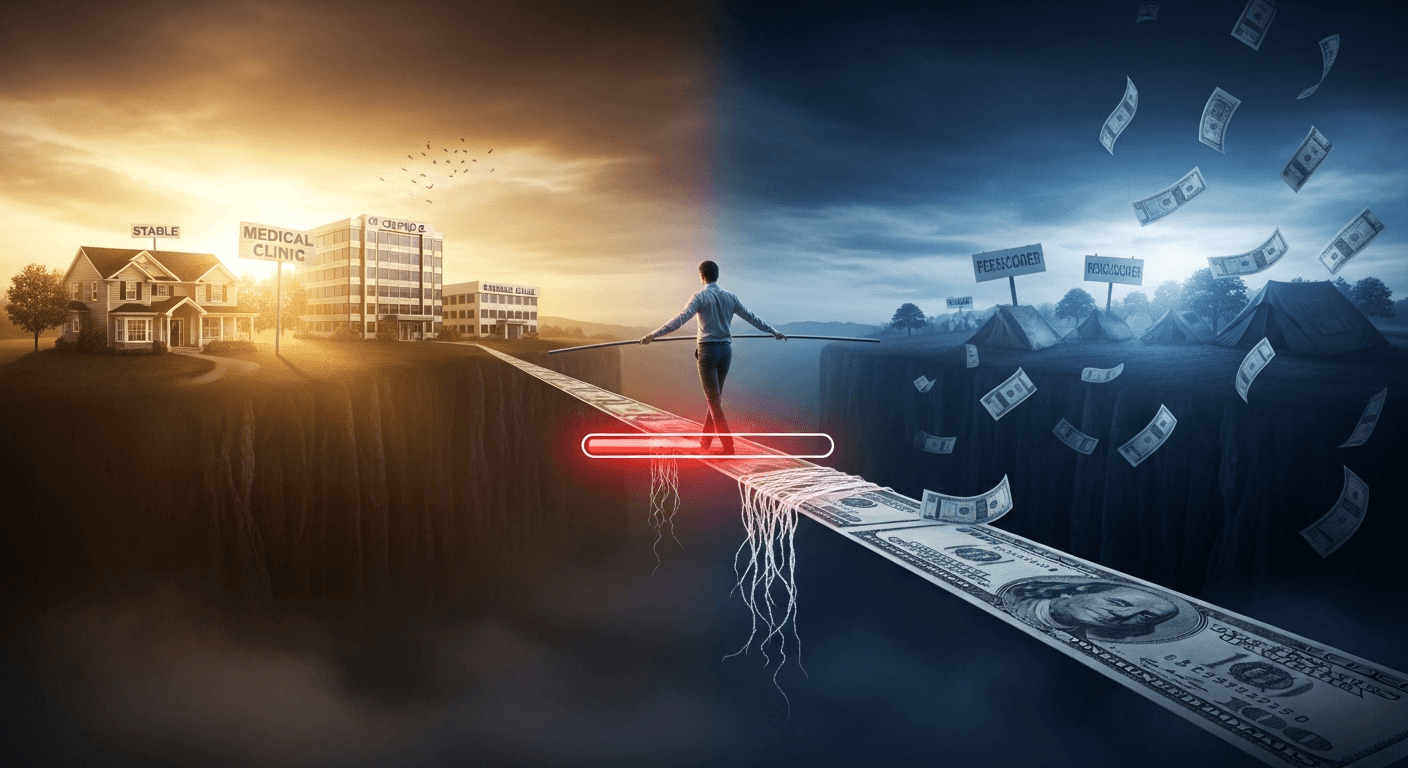
When I first heard that 72% of startup founders report mental health impacts—anxiety, burnout, depression—I assumed the answer was meditation apps and yoga retreats. Individual resilience. Self-care.
Then I learned about the Drama Triangle.
And then I realized I'd been watching the solution play out across 700 episodes of Naruto without recognizing what I was seeing.
The Trap No One Taught Us About
In 1968, psychiatrist Stephen Karpman identified a pattern that explains a staggering amount of human conflict. He called it the Drama Triangle, and it consists of three roles:
The Victim: "Poor me. I'm powerless." Feels oppressed, denies responsibility, seeks rescue.
The Persecutor: "It's all your fault." Blames, criticizes, controls—but notably, doesn't actually solve problems.
The Rescuer: "Let me help you." Feels heroic, but actually enables victimhood and eventually burns out into resentment.
Here's the devastating insight: people don't stay in one role. They cycle through all three, sometimes in a single conversation, without ever escaping the triangle.
The same startup founder might be:
- Victim to their investors ("They don't understand!")
- Persecutor to their team ("Why can't anyone execute?")
- Rescuer to their cofounder ("I'll just handle this myself")
All in the same week. Maybe the same day.
The $359 Billion Problem
This isn't abstract psychology. Research shows employees spend 2.8 hours per week engaged in conflict—amounting to $359 billion annually in lost productivity. In startup contexts, it's worse: that 72% of founders reporting mental health impacts, 45% rating their current mental health as "bad" or "very bad."
The Drama Triangle isn't just personally destructive. It's economically catastrophic.
Enter Naruto
You might wonder what a shonen anime about ninjas has to do with startup psychology. Stay with me.
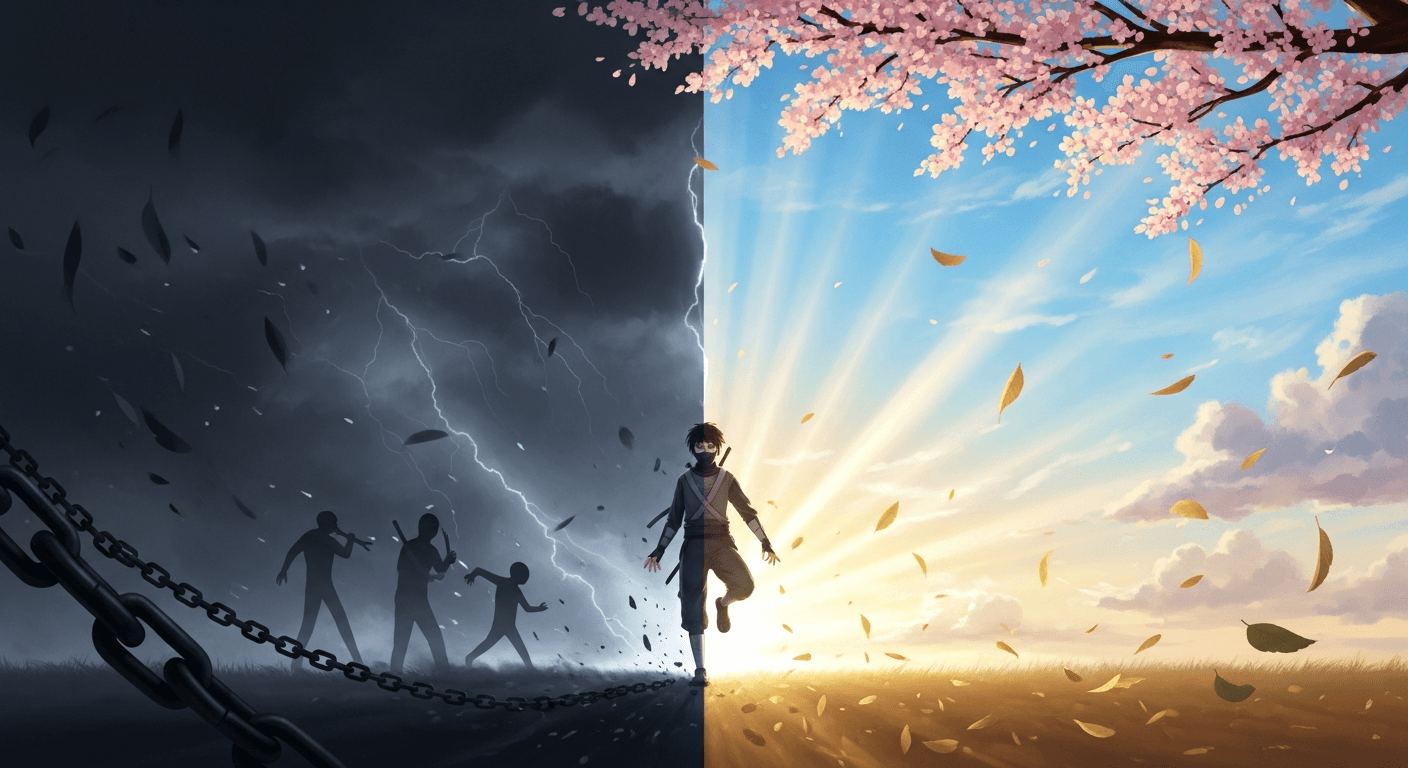
Naruto Uzumaki begins the series as the ultimate victim. He's an orphan. He unknowingly hosts a demon that destroyed his village. The villagers hate and fear him. He has no natural talent—his classmates consistently outperform him.
By every measure, he has justification for playing victim.
He doesn't.
The Creator Archetype
Psychologist David Emerald developed what he calls the Empowerment Dynamic as an alternative to the Drama Triangle. Three new roles replace the toxic triad:
Creator (replaces Victim): Focuses on desired outcomes, takes responsibility, channels emotions productively.
Challenger (replaces Persecutor): Builds others up, holds accountability without blame.
Coach (replaces Rescuer): Empowers others to solve their own problems rather than saving them.
Karpman himself endorsed this framework as "a highly original and effective escape from the Drama Triangle."
And Naruto's entire 700-episode arc is the Creator role in narrative form.
The Ninja Way IS the Creator Way
Watch what Naruto actually does:
Outcome focus: He's obsessively focused on becoming Hokage—the leader of his village. Every setback is measured against this goal, not wallowed in as victim experience.
Radical responsibility: He doesn't blame the village for hating him. He takes responsibility for his own development, training relentlessly even when others doubt him.
Emotional channeling: His anger and pain become fuel for training, not resentment. He channels emotions into action rather than internalizing them destructively.
Empowering others: His famous "talk-no-jutsu"—the ability to convert villains through conversation—isn't about rescuing them. He doesn't fix their problems. He creates space for them to choose their own transformation. That's the Coach role.
The Growth Mindset Embodied
Rock Lee, Naruto's peer, captures the series' philosophy: "A dropout will beat a genius through hard work."
This is Carol Dweck's growth mindset research in anime form. Her work shows that believing abilities can be developed through effort is the key factor separating those who grow from those who stagnate.
Research on software developers confirms the same principle: "Good software engineers actively seek to learn from their errors and conduct post-mortems... viewing failure as an opportunity for reflection."
Naruto fails constantly. But he treats every failure as training data, not identity confirmation.
The Fairy Tale Trap
Why is the Drama Triangle so seductive? Because the roles map to fairy tales we learned as children:
- Victim = princess waiting in the tower
- Rescuer = prince on white horse
- Persecutor = dragon
These roles feel comfortable because they're familiar. The victim gets rescued. The rescuer feels heroic. Even the persecutor feels powerful.
But fairy tales end with external rescue. Real growth requires internal transformation—becoming your own rescuer, which means becoming a Creator.
For startups, the fairy tale trap appears as waiting for:
- The perfect investor who truly understands
- The 10x engineer who solves all technical problems
- The product-market fit revelation that makes everything easy
Creators build incrementally without waiting for magical solutions.
Why Tech Culture Gets This Wrong
Here's what troubles me: tech culture celebrates the Rescuer archetype.
The 10x developer who works 80 hours to save a deadline? The founder who sacrifices everything for the company? These are held up as heroes.
But rescuing creates dependency. When one person consistently saves the day, teams learn they don't need to develop their own problem-solving capabilities. The hero will swoop in.
True leadership isn't the Rescuer. It's the Coach: empowering others to solve their own problems, building capability rather than dependency.
Practical Escape Routes
For developers:
- Recognize when you're in victim mode about technical limitations or management decisions
- Shift from Rescuer (heroically fixing others' code) to Coach (code reviews that teach)
- Use post-mortems as growth mindset practice, not blame sessions
For founders:
- Monitor which Drama Triangle role you default to under stress
- Notice when you need others to be villains to maintain your victim identity
- Build peer support networks—isolation amplifies Drama Triangle dynamics
For creative technologists:
- Choose stories consciously—growth-oriented narratives like Naruto reshape psychological patterns
- Recognize the fairy tale trap in creative projects (waiting for the perfect opportunity)
- Create from Creator mindset, not victim frustration
The Systemic Reality
I want to be clear: when 72% of founders report mental health impacts, the problem isn't individual weakness. It's a system designed to produce Drama Triangle dynamics.
Investors who provide capital without support become persecutors. Founders who internalize unrealistic expectations become victims. Team members who sacrifice health to save the company become rescuers.
Individual resilience is necessary but not sufficient. The ecosystem itself needs to shift from Drama dynamics to Empowerment dynamics.
The Research is Hopeful
Academic research describes Naruto as "an animated case study of how resilience is cultivated through social support, emotional intelligence, and cognitive reframing."
It's not just entertainment. It's psychological infrastructure.
And the research on resilience is hopeful:
- Resilience is learnable, not innate
- Growth mindset can be cultivated through practice
- One person shifting out of the Drama Triangle can catalyze others to escape
- Post-traumatic growth is real—adversity can produce greater strength
Believe It
Naruto's catchphrase—"Believe it!"—sounds corny. But it captures something essential.
The Creator role requires believing in outcomes before they exist. Believing in your ability to grow before you've proven it. Believing in others' capacity to change when they haven't yet.
That belief, research shows, is the difference between those who escape the Drama Triangle and those who cycle through it forever.
The way of the ninja, it turns out, is the way of the creator.
72% mental health impacts. $359 billion in lost productivity. These are the costs of Drama Triangle dynamics.
But escape is possible. The framework exists. And if a demon-hosting orphan can transform from outcast to leader through emotional regulation, growth mindset, and relentless perseverance—maybe you can too.
Believe it.
This research draws on psychological studies, leadership frameworks, and clinical applications of narrative therapy. For the full analysis with sources, visit globalbuilders.club/blog/naruto-drama-triangle.
Written by
Global Builders Club
Global Builders Club
If you found this content valuable, consider donating with crypto.
Suggested Donation: $5-15
Donation Wallet:
0xEc8d88...6EBdF8Accepts:
Supported Chains:
Your support helps Global Builders Club continue creating valuable content and events for the community.