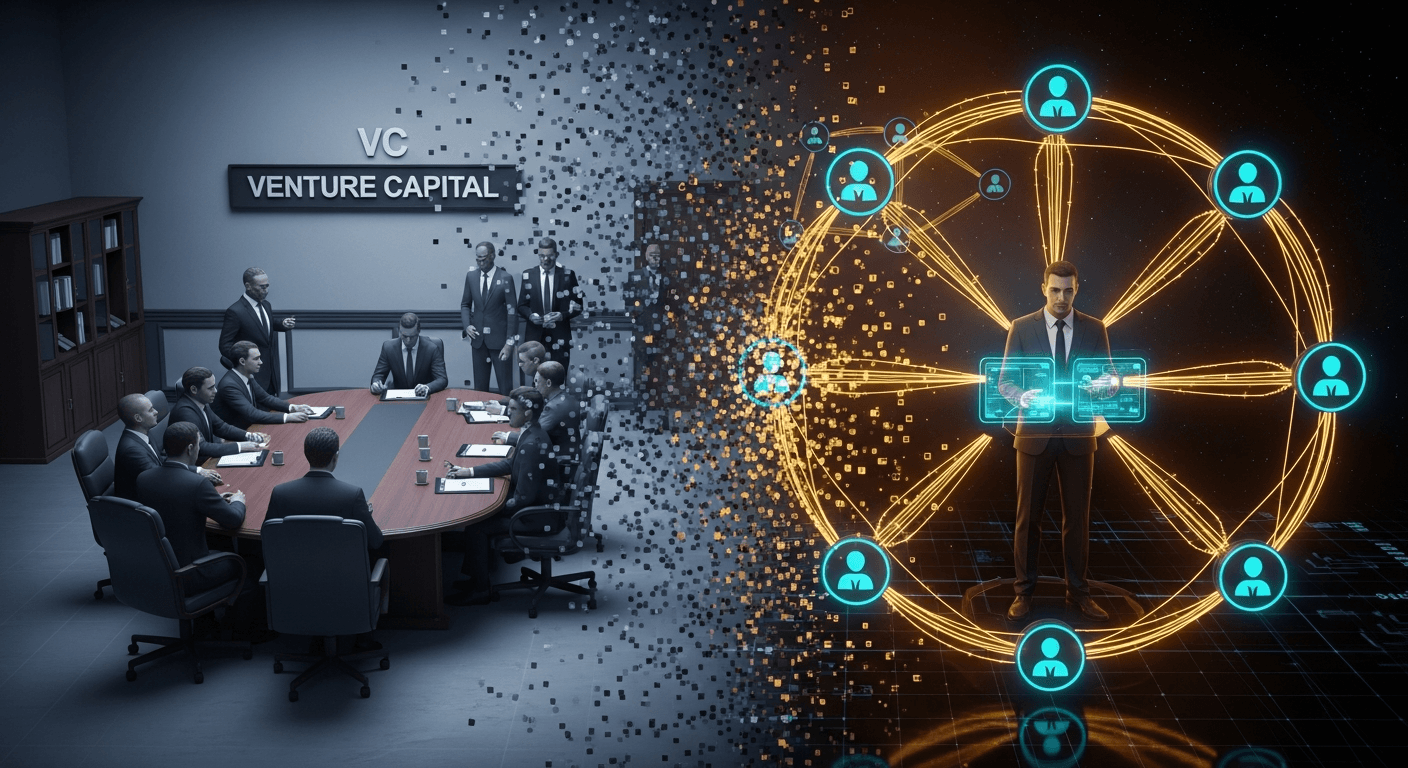
HiveBet: Building a Prediction Market Where Friends Are the Algorithm
What if your friend group was smarter than any expert? The science says it is.
HiveBet: Building a Prediction Market Where Friends Are the Algorithm
What if your friend group was smarter than any expert? The science says it is.
In 1906, the statistician Francis Galton observed something strange at a county fair. Eight hundred people had entered a contest to guess the weight of an ox. When Galton analyzed the guesses, the median was 1,207 pounds—within 1% of the actual weight of 1,198 pounds. No individual was that accurate. The crowd was.
This is the "wisdom of crowds," and it's not just a curiosity. When Best Buy asked employees to predict gift card sales, the collective answer was 99.5% accurate—beating paid experts by a wide margin. The Hollywood Stock Exchange predicts Oscar winners with 90% accuracy.
Now imagine applying this to everything your friend group cares about.
"Will Jake actually finish the marathon?" "Who will get engaged first?" "Will we beat State at homecoming?" "Will the prof cancel Friday's class?"
These questions have answers. Your group has dispersed information about the answers. And when you put money on the line, that information surfaces.
This is HiveBet: a crypto-native social prediction market designed around the principles of "hive mind" architecture.

The Gap in the Market
Prediction markets had a breakout year in 2025. Kalshi processed $43 billion in volume. Polymarket did $33 billion. Both are now valued at $10+ billion. Major players from Crypto.com to DraftKings are launching competing products.
But here's what they're missing: the social layer.
Polymarket is brilliant infrastructure—transparent, instant settlement on the Polygon blockchain. But it has no friend graph. You don't see what your friends are betting on. You can't create a market about whether Jake will finish the marathon.
Meanwhile, apps like Venmo proved that social payments can be a category-defining experience. The activity feed, the emojis, the ability to see friends' transactions—these features made payment requests feel less awkward and more fun.
The opportunity: Combine Polymarket's crypto infrastructure with Venmo's social features, and enable user-generated markets for everything from sports to personal milestones.
That's HiveBet.

Why the Hive Mind Works
Kevin Kelly's 1994 book Out of Control documented a powerful insight: the most powerful systems have no central control.
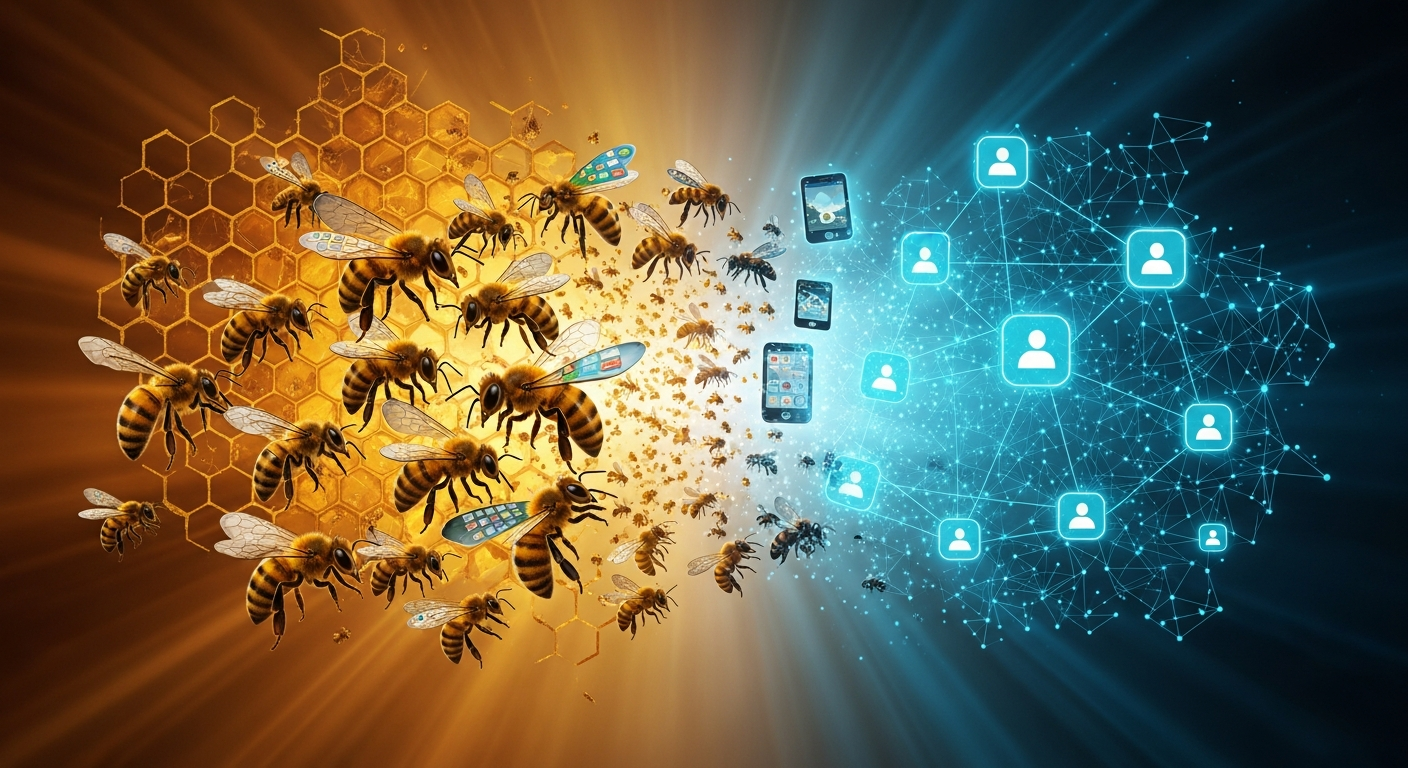
A bee swarm makes sophisticated decisions—choosing nest sites, allocating foragers—without the queen directing anything. She's not a leader; she's an egg-layer. The swarm's intelligence emerges from thousands of bees following simple rules.
Kelly called this "hive mind," and he argued it's the universal architecture of complex systems:
"The marvel of hive mind is that no one is in control, and yet an invisible hand governs."
A prediction market IS a hive mind. Each trader follows simple rules: buy what you believe will happen, sell what you don't. Prices emerge from collective activity. No central authority sets the odds—they emerge from many agents betting their beliefs.
Academic research has validated this for social networks specifically:
"Participants with more social connections perform significantly better in prediction markets." — Social Network-Embedded Prediction Markets, ScienceDirect
Your friend group isn't just entertainment. It's a distributed intelligence machine. The question is whether you're harvesting that intelligence.
The Nine Laws of God, Applied to Product Design
Kelly's book ends with "The Nine Laws of God"—principles for building complex, self-sustaining systems. Each maps directly to HiveBet's architecture:
1. Distribute being: Every user can create markets, not just the platform. "Will Jake finish the marathon?" is as valid as "Who wins the Super Bowl?"
2. Control from the bottom up: User-generated market rules, community moderation, reputation that emerges from behavior.
3. Cultivate increasing returns: Friend referrals compound. Each group that joins brings their friends. Network effects are built into every feature.
4. Grow by chunking: Start with friend groups (5-20 people). Groups combine into schools. Schools into regions. Each layer is self-contained but interoperable.
5. Maximize the fringes: Encourage weird, hyper-local, niche markets. "Will it snow Saturday in Boulder?" is a market. The long tail of predictions is where the magic happens.
6. Honor your errors: Public prediction track records. Calibration scores showing how accurate you are. Learn from losses.
7. Pursue no optima: Multiple bet types, stake levels, timeframes. The platform serves entertainment AND information AND social connection.
8. Seek persistent disequilibrium: Always-active markets. Prices always moving. Never "done"—there's always another prediction.
9. Change changes itself: Community governance. A/B testing of resolution mechanisms. The rules evolve as the community discovers edge cases.
This isn't just philosophy—it's a product spec.
What You Can Bet On
With Friends:
- "Who will get engaged first?"
- "Will Jake actually go to the gym?"
- "Will we take the group trip?"
- "Who will pass the driving test first?"
Sports (Fantasy-Style):
- Season-long prediction leagues
- Game-by-game props with your league
- "Will [player] score in the first half?"
Campus:
- "Will the prof cancel class?"
- "Will we beat State at homecoming?"
- "Will dorm X win intramurals?"
Work (Play-Money Mode):
- "Will we hit Q1 targets?"
- "Will the merger close?"
- "Will [project] ship on time?"
Pop Culture:
- "Will they break up?"
- "Will the show get renewed?"
- "Oscar/Grammy predictions"
Hyper-Local:
- "Will it snow Saturday?"
- "Will the restaurant be packed?"
- "Will traffic be bad?"

How It Works
Creating a Market
You tap "New Market" and write a question: "Will Jake finish the marathon?"
You set outcomes (Yes/No), a deadline (Sunday 6pm), and resolution criteria ("Jake's fitness app or photo at finish"). Then you invite friends or post to your feed.
The market goes live. Friends buy shares in the outcome they believe. Prices move as money flows in. 65 cents for "Yes" means the group thinks there's a 65% chance Jake finishes.
Resolution
When the deadline passes, you propose the outcome: "Yes, Jake finished." The counter-party confirms (or disputes). If there's a dispute, mutual friends vote—with their own reputation on the line for honest arbitration.
Payouts happen automatically. Results post to the social feed. Bragging rights are distributed.
The Social Layer
This is what makes HiveBet different from Polymarket:
- Activity Feed: See friends' bets, wins, market creations
- Groups: Private betting pools with shared history
- Profiles: Prediction track record, calibration score, badges
- Leaderboards: Friends → School → Region → Global
- Comments: Trash talk, celebrations, debates
It's Venmo for betting. You join because your friends are there. You stay because leaving means leaving your friends.
Why Crypto?
Three reasons:
1. Instant, transparent settlement. When Jake crosses the finish line, the smart contract pays out automatically. No waiting for a platform to process. No disputes about whether the money was actually transferred.
2. User-generated markets. Traditional betting platforms need to curate every market. Smart contracts let anyone create any market. The marginal cost of "Will Jake finish the marathon?" is zero.
3. Global, permissionless access. USDC works anywhere. Your friend in Singapore can bet with your friend in São Paulo with no bank intermediaries.
The blockchain is invisible to users. You sign up with your phone number, add money via Apple Pay, and never see a seed phrase. The crypto is infrastructure, not interface.

The Hive Mind Economy
Here's the deeper thesis: as prediction markets scale, they become infrastructure for collective intelligence.
Your friend group is a small hive mind. Your campus is a larger one. Your industry is larger still. Each layer aggregates information that no individual possesses.
When you bet on "Will Jake finish the marathon?", you're contributing your private information to a market price. That price becomes public knowledge—a shared belief about what will happen.
Scale this up, and you have:
- Companies using internal prediction markets to forecast projects
- Communities pooling knowledge about local events
- Fandoms aggregating beliefs about their favorite shows
- The entire internet betting on everything
This is Kelly's neo-biological civilization coming to life: distributed intelligence, emergent from many agents, governing itself through markets.
The Bottom Line
The prediction market industry is worth $20+ billion. The social payment industry is worth $100+ billion. The intersection—social prediction markets—is wide open.
HiveBet applies Kevin Kelly's hive mind principles to build a new category:
- Crypto-native: Transparent, instant, global
- Social-first: Friend graph, activity feed, groups
- User-generated: Any market, any topic, any group
- Peer-to-peer: No house edge, friends betting friends
The wisdom of crowds is real. Your friend group is smarter than any expert. The question is whether you're capturing that intelligence.
Plant the seeds. Prepare the soil. Let the swarm do the rest.
HiveBet is a concept proposal. For the full technical analysis including architecture, business model, and go-to-market strategy, see the complete analysis document.
Written by
Global Builders Club
Global Builders Club
If you found this content valuable, consider donating with crypto.
Suggested Donation: $5-15
Donation Wallet:
0xEc8d88...6EBdF8Accepts:
Supported Chains:
Your support helps Global Builders Club continue creating valuable content and events for the community.